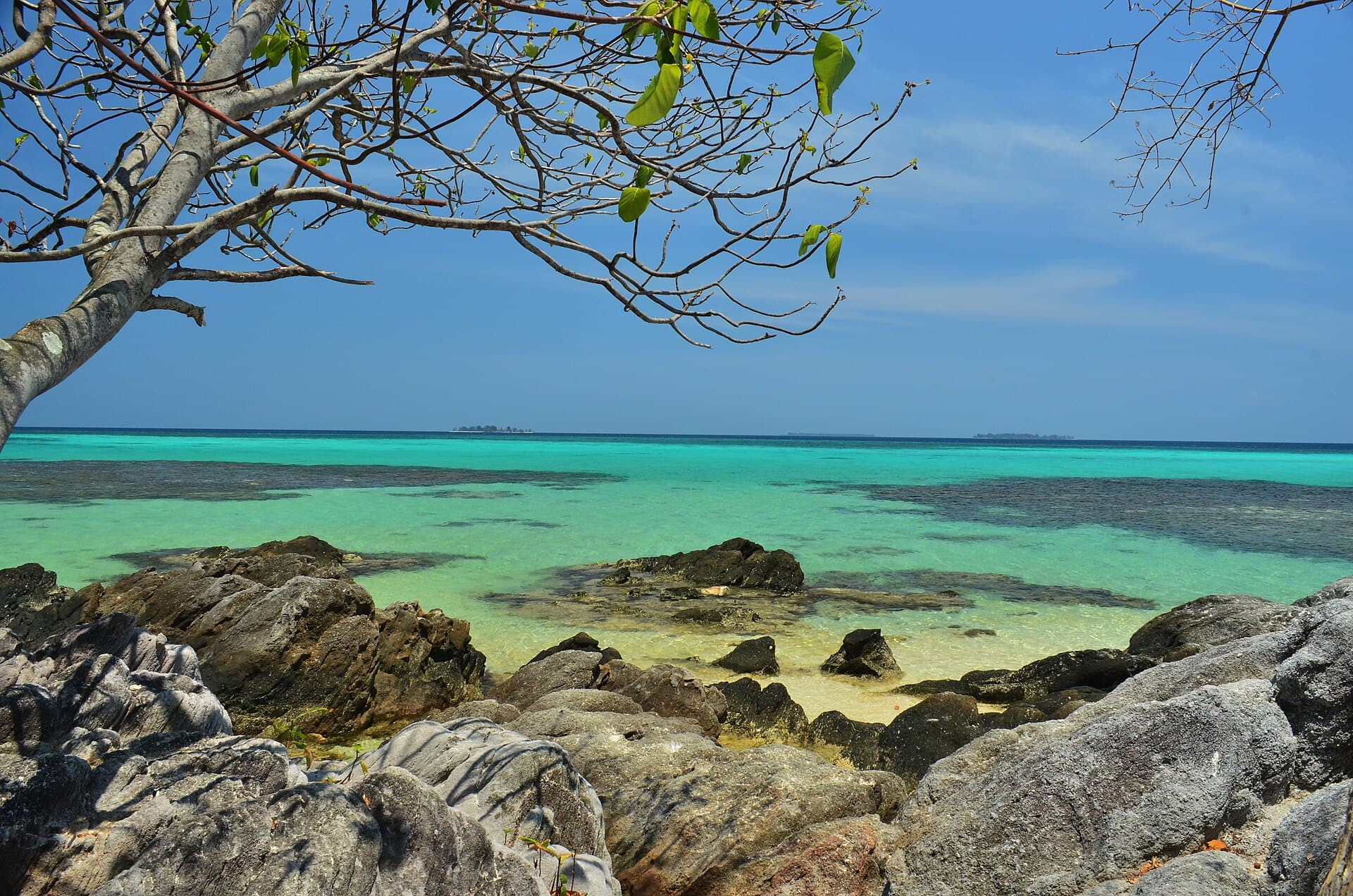
Karimunjawa is the closest thing Java has to a desert-island escape: 27 islands scattered across the Java Sea, about 80 km off the coast of Central Java, with white sandbars, shallow coral reefs and one small town. It is a marine national park, a working fishing community and — outside Indonesian holidays — remarkably quiet.
It is also a place that rewards preparation. There are very few ATMs, boats that do not sail in bad weather, and almost nothing you can pay for by card. This guide sets out what to expect.
Karimunjawa at a glance
- Where: Java Sea, about 80 km north-west of Jepara; administratively part of Jepara Regency, Central Java.
- Islands: 27, of which five are inhabited — Karimunjawa, Kemujan, Parang, Nyamuk and Genting.
- Protected status: national park since 1999; part of a UNESCO biosphere reserve together with Jepara and Mount Muria since 2020.
- People: around ten thousand, mainly of Javanese, Bugis and Madurese descent, almost all Muslim.
- Language: Indonesian and Javanese. English is limited outside guesthouses and dive shops.
- Money: Indonesian rupiah (IDR), in cash.
- Time zone: Western Indonesia Time (WIB), UTC+7.
A little history
Local tradition traces the settlement of the islands to Sunan Nyamplungan, said to be the son of Sunan Muria, one of the nine saints who spread Islam in Java. Sent away by his father to learn humility, he is said to have sailed towards islands that appeared from the slopes of Mount Muria only as a faint haze — kremun-kremun in Javanese — which is the popular explanation of the name. His tomb, in the hills north of the town, is still a place of pilgrimage.
Over the following centuries the islands drew seafarers from across the archipelago: Bugis and Mandar sailors from Sulawesi, Madurese fishermen, Javanese farmers. You can still see it in the stilt houses of the Bugis villages on Kemujan. Legends cling to the place — the best known says that anyone who carries the wood of the sacred dewadaru tree off the island will come to grief at sea.
Tourism is recent. Until the 2010s there was power for only part of the day and a handful of homestays. The national park, declared to protect the reefs, mangroves, seagrass and lowland forest, is zoned: some areas are strictly protected, others are used by fishermen and visitors.
The places you will actually go
 Small islands & reefs
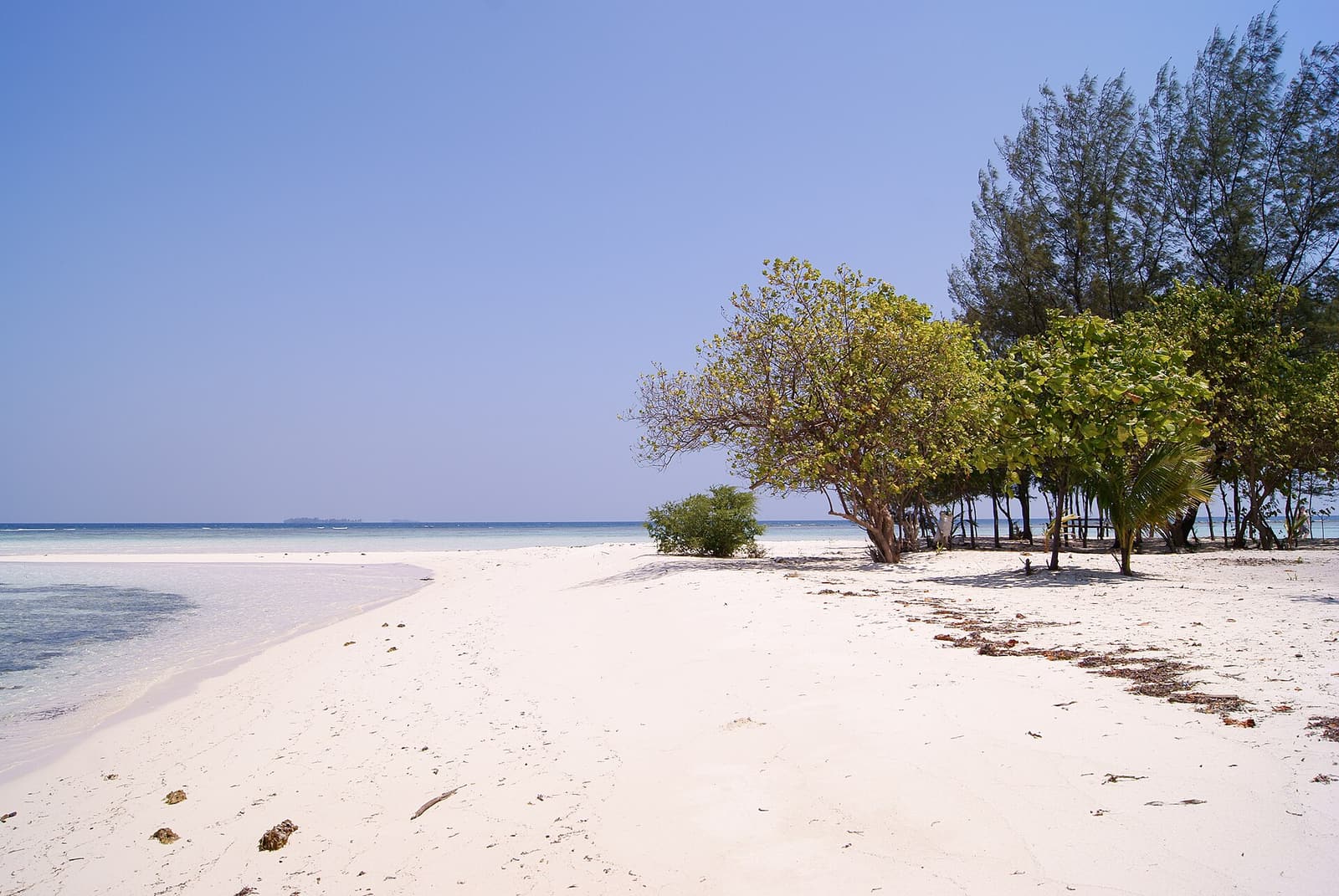
 Island Hopping & the Cemara Islands
Sandbars, casuarina trees and grilled fish on the beach
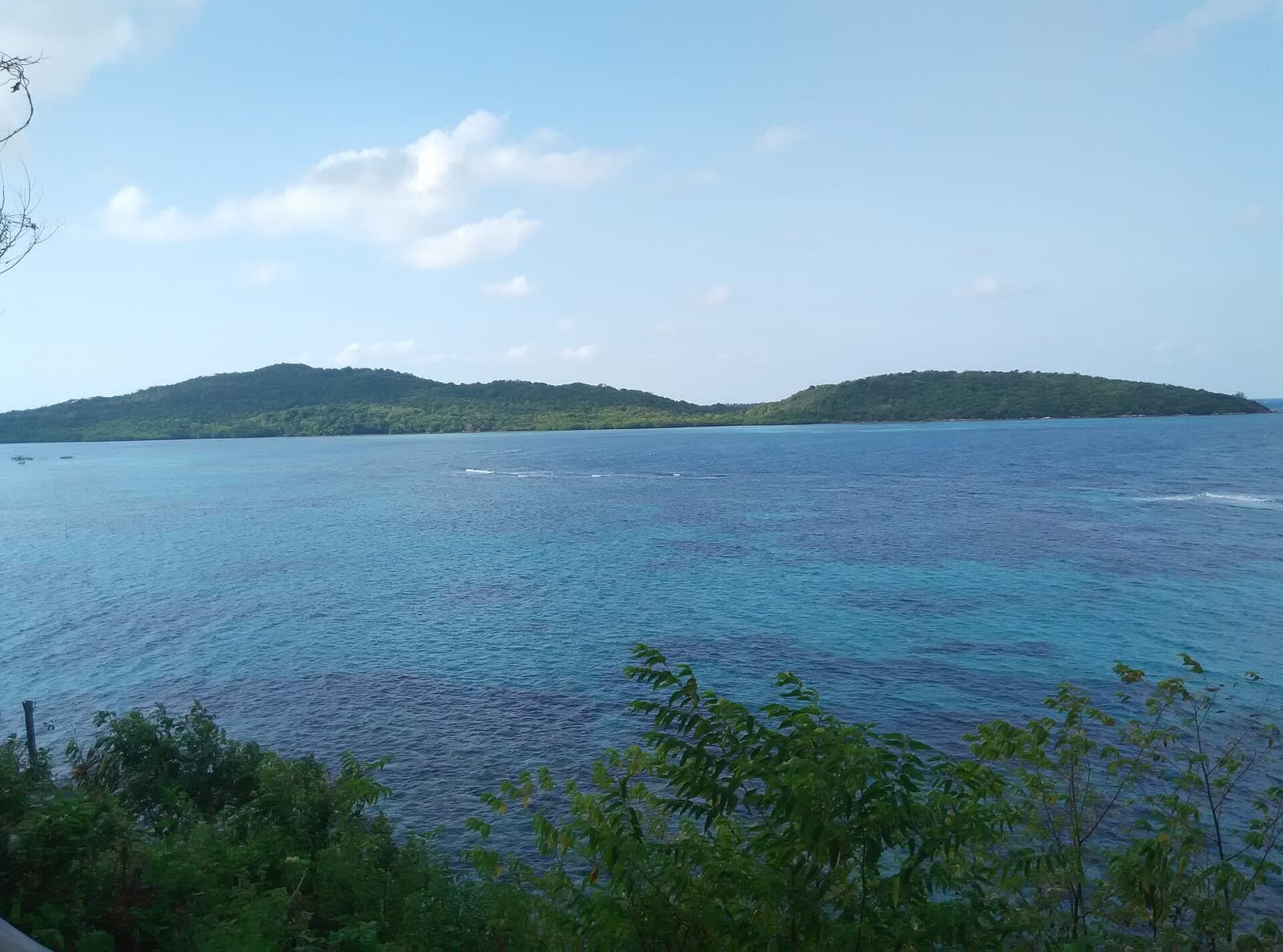
A day on a wooden boat among the small islands is the reason most people come to Karimunjawa. The classic western route takes in Menjangan Kecil, the sandbars of Cemara Kecil and Cemara Besar and a sunset at Tanjung Gelam; the eastern route heads for Cilik and Tengah.
 Small islands & reefs
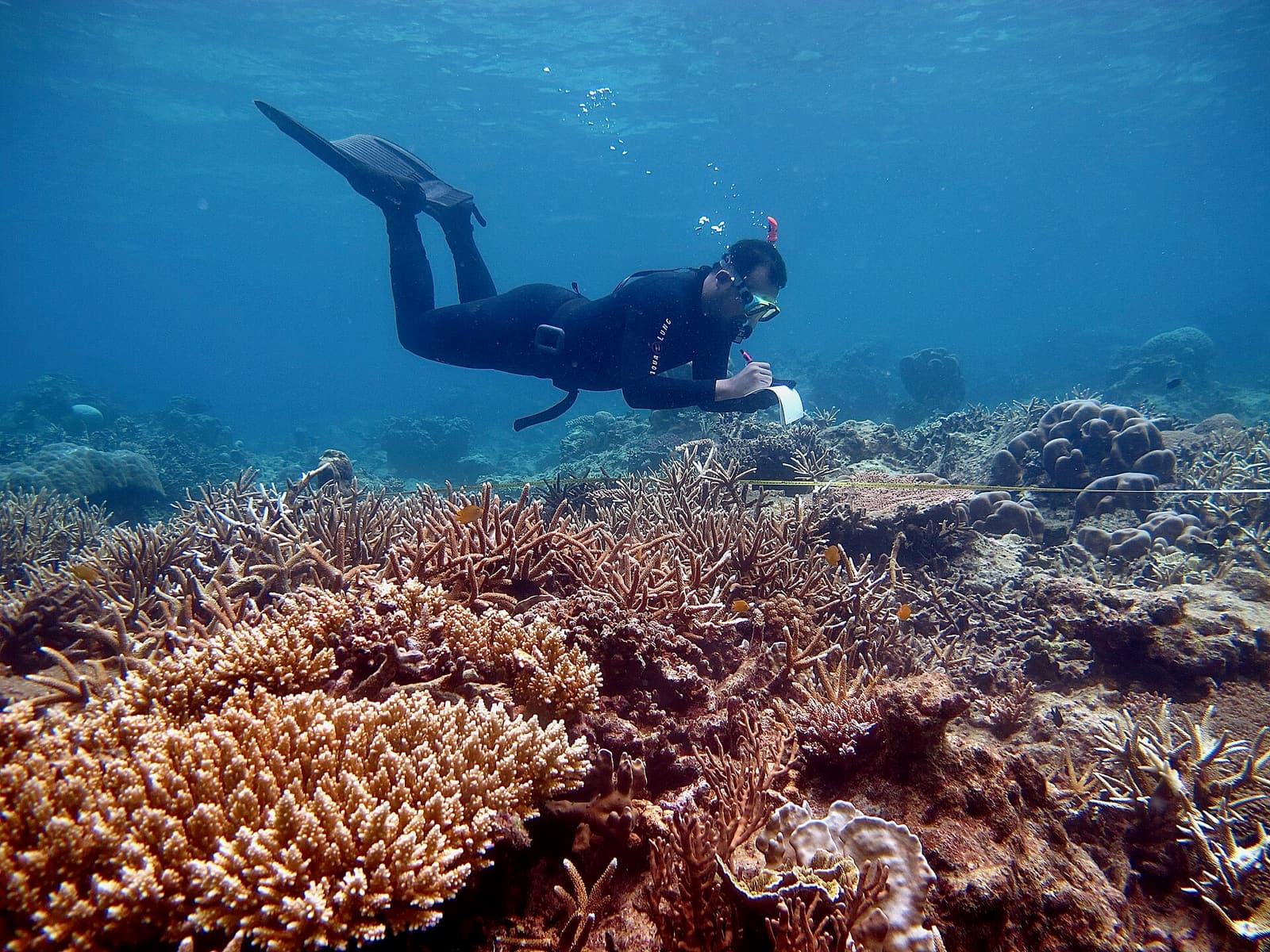
 Snorkelling & Diving in Karimunjawa
Warm, shallow coral gardens in a marine national park
Karimunjawa’s reefs are shallow, warm and close to the islands, which makes them forgiving for beginners: hard-coral gardens, clownfish in their anemones and clouds of small reef fish. Divers can add deeper reefs and a shipwreck off Kemujan.
 On Karimunjawa & Kemujan
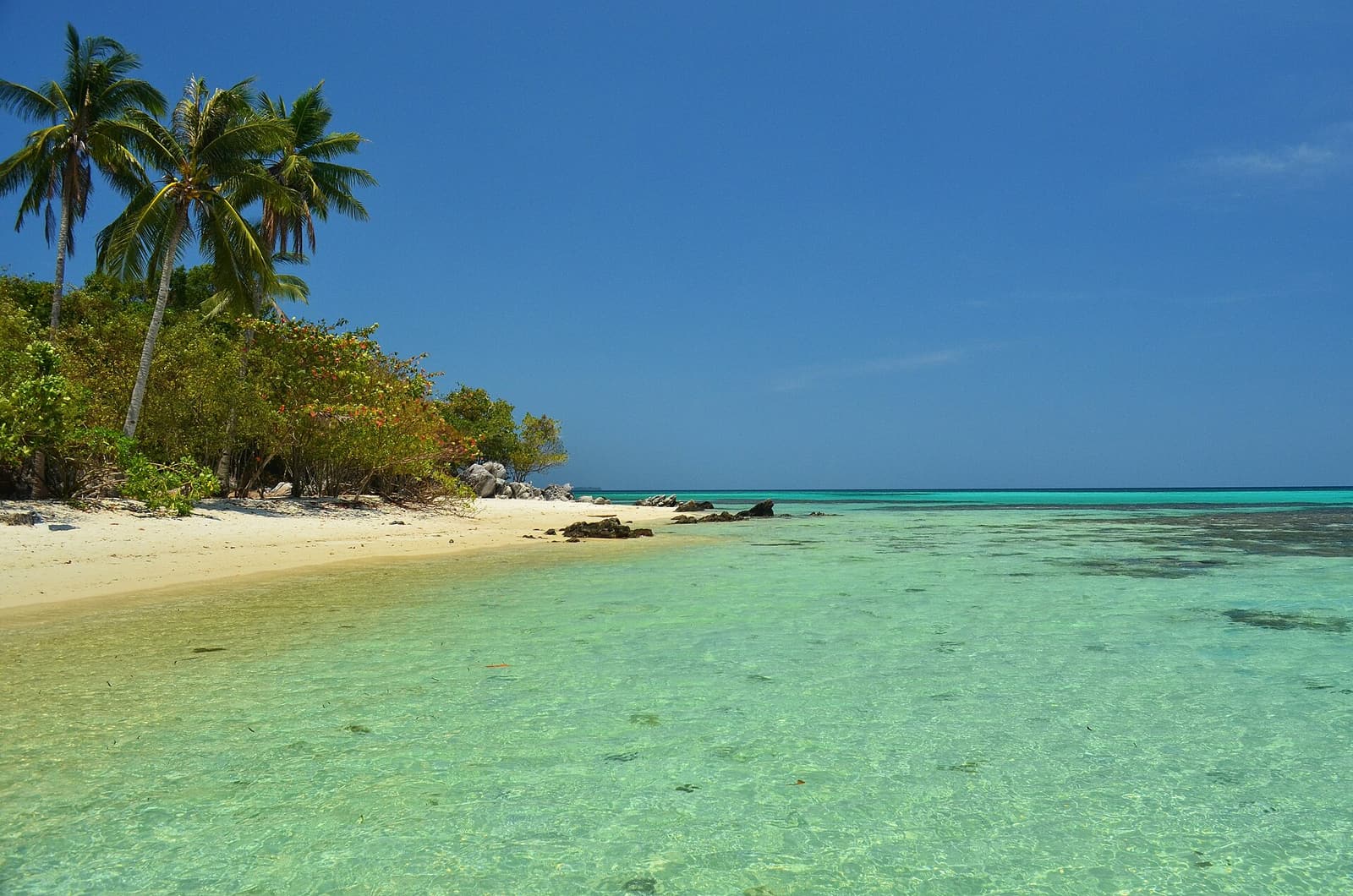
 Tanjung Gelam Beach
Leaning palms, granite boulders and the island’s sunset
Tanjung Gelam (also called Ujung Gelam) is the best-known beach on the main island: white sand, clear shallow water, coconut palms leaning out over the sea and smooth boulders at its western tip. It faces west, so this is where the day’s boats stop for sunset.
 On Karimunjawa & Kemujan
 Bukit Love & Bukit Joko Tuwo
Two hilltop viewpoints over the town and the islands
Karimunjawa’s interior is steep and forested, and two small hills near the town have been turned into viewpoints. Bukit Love looks west over the islets with its much-photographed sign; Bukit Joko Tuwo sits above the harbour and displays the skeleton of a giant fish.
How many days do you need?
Plan on three nights at the very least, four or five ideally. The crossing eats most of a day in each direction, and you want two full days on the water plus one on land. Then add a buffer day after the islands in case the boat does not sail. A two-night visit is possible but leaves no room for weather.
Money: bring cash
This is the single most important practical point. Karimunjawa town has only a couple of ATMs. They can run out of notes or go offline for days, and they do not reliably accept foreign cards. Guesthouses, warungs, boat operators, scooter rental and the national park ticket office are cash-only with rare exceptions.
- Withdraw rupiah in Semarang or Jepara before you cross.
- Budget for every night, meal, tour and your return ticket — then add enough for two or three unplanned extra nights.
- Carry small notes; change for large ones is not always available.
- Pay for what you can in advance online (accommodation, tours, transfers) to reduce the cash you need to carry.
What things cost
Karimunjawa is inexpensive by international standards. As a rough guide: a simple guesthouse room costs from around US$15–30 a night, a comfortable mid-range hotel roughly US$40–80 and the few resorts from about US$100 upwards; a grilled-fish dinner at the night market a few dollars; scooter rental a few dollars a day; and a place on a shared island-hopping boat about US$15–25 depending on where you book. Prices rise at Indonesian holidays. Check current rates before you rely on any figure.
Electricity, internet and phones
The main island has had round-the-clock mains electricity since the mid-2010s, which older guidebooks do not reflect. Supply is still from a small local grid, so power cuts happen and air-conditioning is not universal. On the smaller inhabited islands and at remote resorts, power may come from a generator for limited hours, typically in the evening.
- Bring a power bank and a torch or head-lamp.
- Indonesia uses two-round-pin plugs (types C and F) at 230 V.
- Mobile data works in and around the town — Telkomsel is generally the most reliable network — and fades as you go north or out to sea.
- Guesthouse Wi-Fi is common but slow. Do not plan to work remotely.
Getting around
The main island is about 20 km from the town to the bridge at Kemujan, with one main road and small side roads to the beaches. Almost everyone rents a scooter; your guesthouse will arrange one. Roads are quiet but hilly, with gravel on bends and the odd goat. Wear the helmet, ride slowly and check that your travel insurance covers motorbikes — many policies require a valid licence for the vehicle class.
If you do not ride, guesthouses can arrange a car with driver for a half or full day. For the small islands you need a boat: see island hopping.
Food and drink
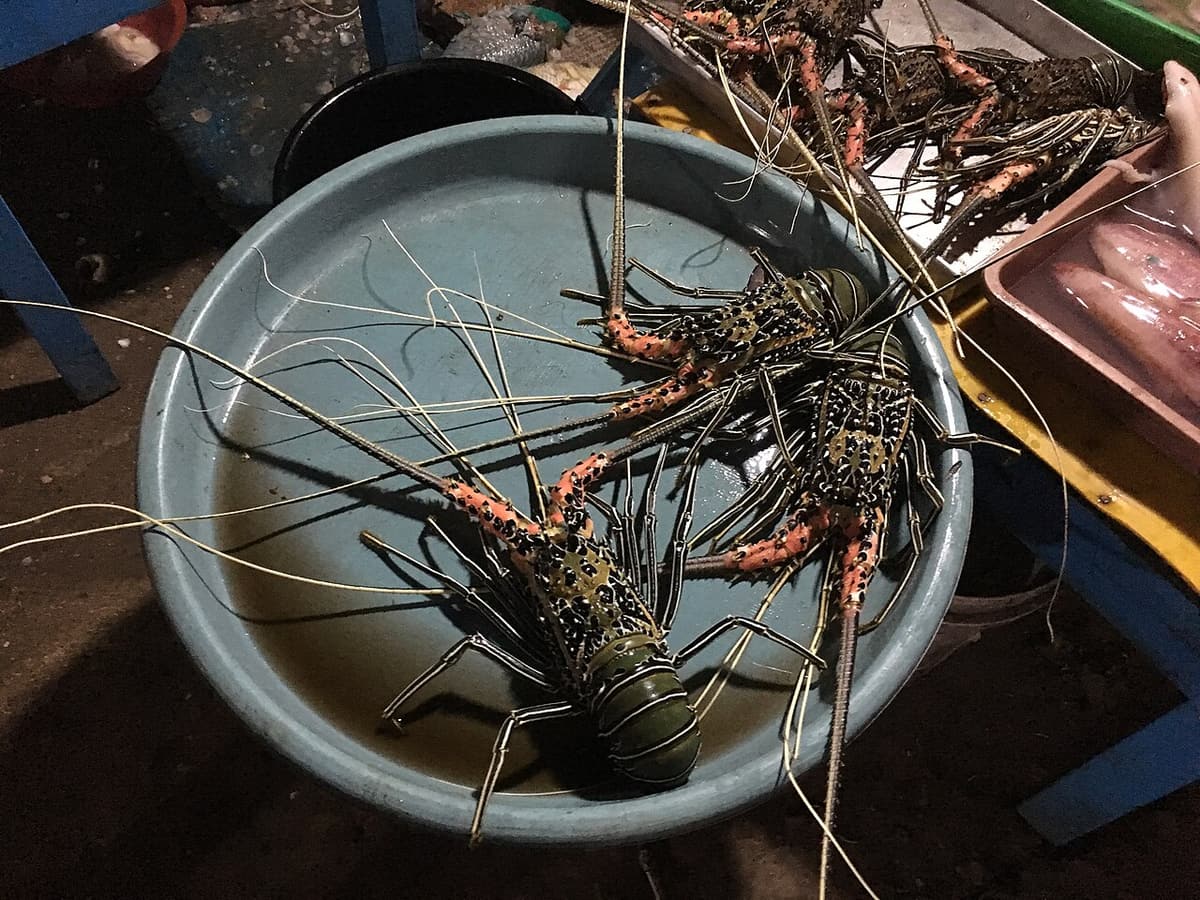
Seafood is the point. At the alun-alun night market in town you choose fish, squid, prawns or lobster from the ice and have it grilled to order. Elsewhere, warungs serve the Javanese standards — nasi goreng, mie goreng, soto, gado-gado — and a few cafés aimed at foreign visitors do pasta, pancakes and good coffee. Vegetarians will manage with tempeh, tofu, vegetables and eggs, but should say so clearly (“saya tidak makan daging atau ikan”).
Drink bottled or filtered water; many guesthouses offer refills. Alcohol is sold in a small number of tourist-oriented places and is expensive; this is a devout community and public drinking is not part of local life.
Health and safety
- Medical care is basic. There is a community health centre (puskesmas) but no hospital; serious cases go to Jepara or Semarang, by boat. Bring any medication you need and carry travel insurance that covers evacuation.
- Sun and dehydration are the commonest problems. A day on an open boat near the equator burns quickly.
- Mosquitoes are active at dawn and dusk, especially near mangroves. Use repellent; ask a travel clinic about current advice for Java.
- In the sea: watch for sea urchins and stonefish on reef flats, wear reef shoes when wading, and do not touch coral — cuts infect easily.
- Crime is rare. Normal care with valuables is enough.
Culture and etiquette
Karimunjawa is conservative and friendly. Dress modestly away from the beach — shoulders and knees covered in town, in villages and at religious sites. Do not sunbathe topless anywhere. During Ramadan, be discreet about eating and drinking in public by day. Ask before photographing people, and take your shoes off when entering a home or a mosque. A few words of Indonesian — terima kasih (thank you), permisi (excuse me) — go a long way.
Travel responsibly
The reefs are the islands’ livelihood and they are under pressure from anchors, careless fins, plastic and, in recent years, a well-publicised dispute over shrimp ponds on the coast. A few habits help:
- Never stand on or touch coral, and do not let a boat crew anchor on it for you.
- Do not feed fish. Do not buy shells, coral or turtle products.
- Wear a rash vest rather than slathering on sunscreen; use a reef-safe one where you need it.
- Refill a water bottle and take your rubbish back to town.
- Skip the captive-shark pools. We explain why on the Menjangan islands page.
- Pay the national park fee — it funds the rangers.
What to pack
- Cash in rupiah, in a waterproof pouch.
- Rash vest, hat, sunglasses, reef-safe sunscreen.
- Your own mask and snorkel if you have them; reef shoes.
- Dry bag, quick-dry towel, power bank, torch.
- Insect repellent, seasickness tablets, basic first-aid kit and any prescription medicine.
- A light long-sleeved layer and trousers or a sarong for town.
- Passport — it is checked for the boat and the park fee.
Combining Karimunjawa with the rest of Java
Because every route passes through Central Java, the islands slot easily into a bigger trip. A classic ten days: fly into Yogyakarta for Borobudur and Prambanan; transfer to Jepara; four nights on the islands; back through Semarang for the Old Town and a flight out. Travellers heading east continue from Semarang or Yogyakarta by train towards Surabaya, Bromo and Ijen.
Ready to plan the crossing? Go to getting to Karimunjawa, or see the best tours and transfers.